Print Books vs E-Books: 5 reasons why print books persist in the digital age

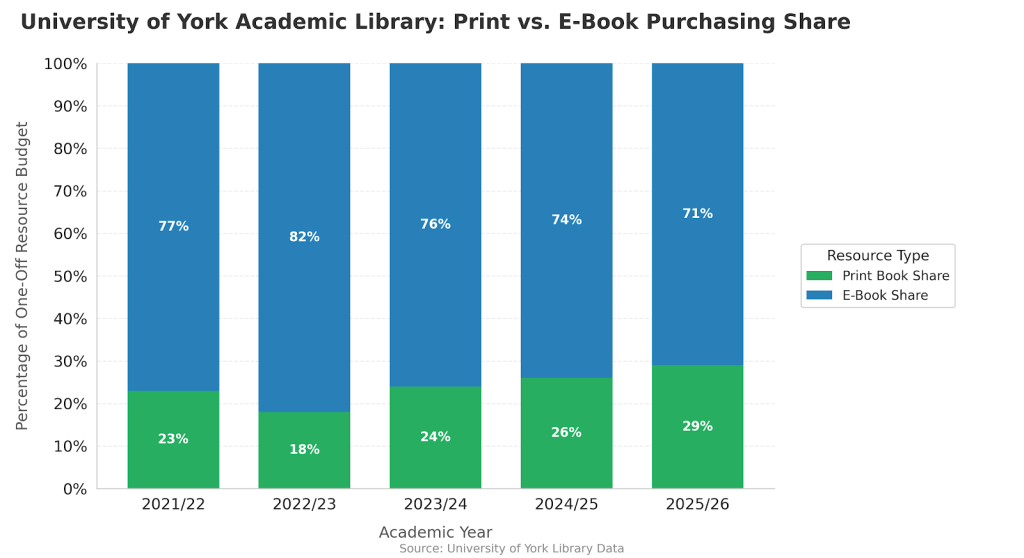
The digital age has fundamentally transformed the academic library, with the acquisition of e-books and online resources becoming the dominant force in collection development. The sheer volume, ease of remote access, and discoverability of electronic resources have undeniably reshaped scholarly research. To illustrate this seismic shift, consider the purchasing data for one-off resources at the University of York , where electronic resources have consistently commanded 70-80% of the total budget in recent years
Read More »

Do Audiobooks Count as Reading? (Spoiler: YES!)

I’ve spent a lot of time thinking about the Great Audiobook Debate. It sounds like a wrestling match in the book club, and honestly, it sometimes feels like one. You know the scene: you’re excited to discuss a new book, and you mention, “Oh, I listened to the audiobook,” only to have someone reply, “So, you didn’t actually read it?” Cue the eye-roll.

It’s an exhausting, circular argument, as old as audiobooks themselves and it’s one of those knotty problems that book lovers and library folks get stuck on.

It’s not as simple as “this one is good” and “this one is bad.” But, since you’re here, my professional opinion is a resounding YES, and you can tell them that a Librarian told you so.

Now, before anyone grabs their pitchforks (or their physical copies of War and Peace), let’s unpack this.

Image by Ri Butov from Pixabay

Read More »

5 Inconvenient Facts All Librarians Should Know About E-Books

During the Covid-19 pandemic, the promise of the digital library became clearer than ever. As physical doors closed, e-books offered a vital lifeline, foregrounding the incredible potential of on-demand access to information and culture. Yet this moment of digital promise also cast a harsh light on the dysfunctional infrastructure, predatory business models, and outdated legal frameworks that govern the lending of digital content.

For librarians on the front lines, the digital dream often clashes with a difficult daily reality. While lending a physical book is a straightforward and established process, licensing a digital one is complex, expensive, and often deeply frustrating. This has ignited a “palpable and widespread dissatisfaction” among library professionals who see a growing disconnect between their public mission and the commercial constraints of the e-book market.

This article uncovers five of the most impactful and often counter-intuitive realities that shape the world of e-lending today, revealing the hidden complexities that exist just beyond the reader’s click.

Image by Eli Digital Creative from Pixabay

Read More »